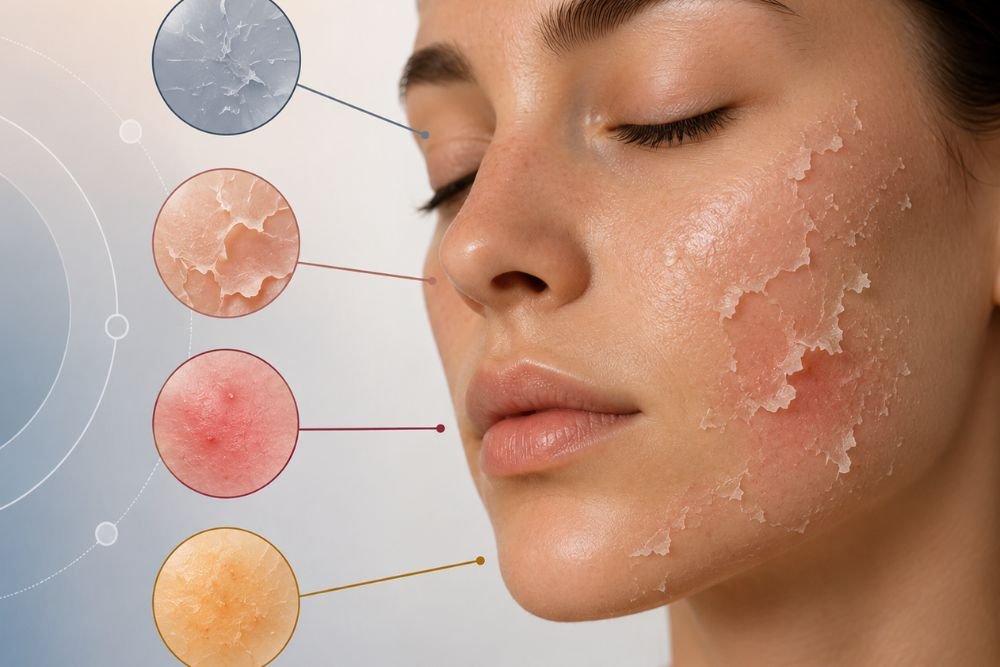
There is a common belief that after a medical-grade chemical peel, your face should flake off evenly like a sheet of parchment paper. When patients notice they are peeling heavily around the mouth but not at all on their forehead, they often worry the treatment didn’t work.
In reality, your peeling pattern is a highly accurate, visible map of your skin’s internal hydration levels and barrier health. Your skin is telling a story.
The Science of Controlled Desquamation
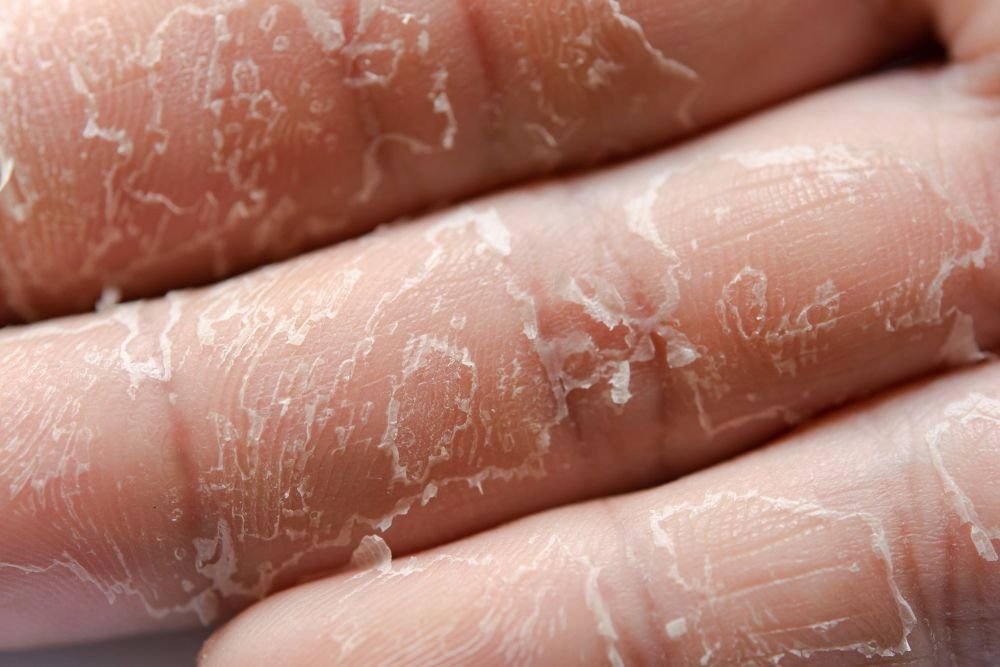
Chemical peels work by breaking the microscopic intercellular “glue” (desmosomes) that holds dead, dull skin cells together. Once this glue is dissolved, your skin naturally sheds those top layers to reveal fresh, bright skin underneath. However, how quickly and evenly that glue dissolves depends entirely on local oil production and moisture levels.
Decoding Your Peel Regions
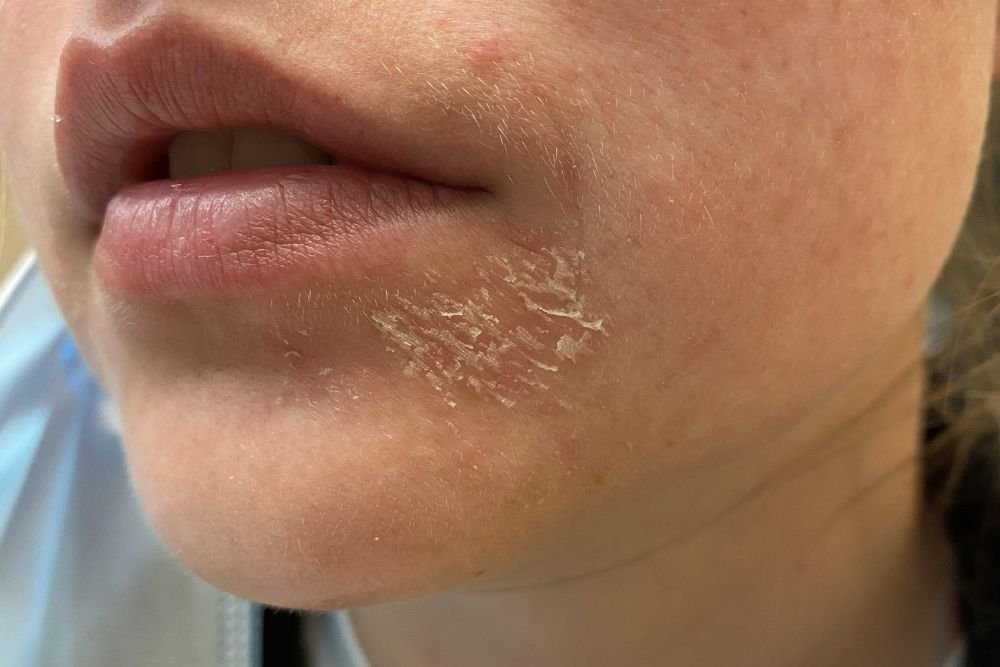
The Perioral Area (Around the Mouth) — Peeling First and Fastest
Almost everyone flakes around the mouth and nose by day three. This happens because this zone is the most expressive area of the face. Constant talking, eating, and smiling physically pull the loosening skin cells apart faster. Additionally, this area has a thinner epidermal layer, making the shedding process highly visible early on.
The T-Zone (Forehead and Nose) — The Delayed Patch
If you notice your forehead takes five to seven days to flake—or only sheds in tiny, powdery increments—it is usually due to your sebum (oil) matrix. Sebaceous glands are highly concentrated here. Natural oils act as a buffer, slowing down the penetration of the peel acid and keeping the dead skin cells temporarily lubricated. This isn’t a failure; it simply means the exfoliation is occurring at a deeper, microscopic level.
The Perimeter (Cheeks and Jawline) — The Patchy Zone
Peeling in uneven patches on the outer cheeks usually reveals localized barrier disruption. Areas that peel instantly and deeply on the cheeks often point to chronic dryness or past sun damage where the skin barrier was already compromised and thin.
Trust the Process, Don’t Pull the Flakes

The absolute golden rule of peels is to never pick or pull a hanging flake. Forcing skin to detach before its lower layers have fully formed can result in post-inflammatory hyperpigmentation (PIH). Let your skin read out its blueprint naturally while keeping it comforted with lipid-replenishing balms.