
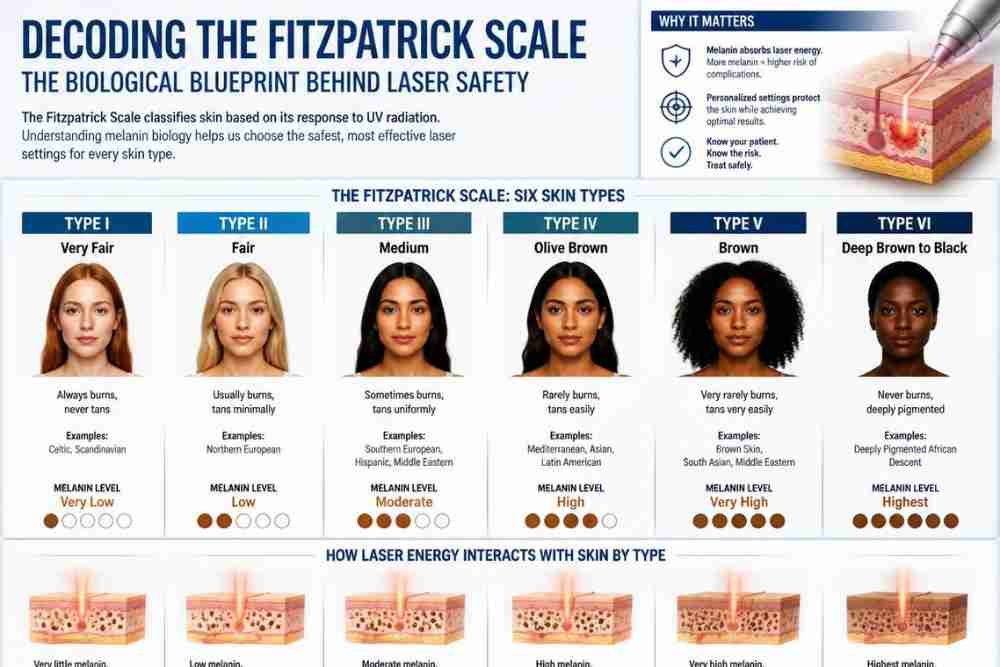
When you walk into Ziva Wellness for a skin transformation, we don’t just look at your wrinkles or scars. Before a medical laser ever touches your skin, Dr. Vini Singh conducts a rigorous evaluation using a foundational dermatological tool: The Fitzpatrick Skin Scale.
Understanding this scale is the absolute key to achieving dramatic skin rejuvenation while keeping your skin barrier completely safe from burns or discoloration.
What is the Fitzpatrick Scale?
Developed in 1975 by Harvard dermatologist Thomas B. Fitzpatrick, this classification system categorizes human skin into six distinct types based on two primary biological factors: the amount of melanin (pigment) present in the skin, and how the skin reacts to ultraviolet (UV) radiation.
| Fitzpatrick Type | Skin Characteristics | Genetic Heritage / Reactions |
| Type I | Ivory, porcelain, extremely fair | Always burns, never tans (e.g., red hair, freckles) |
| Type II | Fair, light-colored skin | Burns easily, tans minimally |
| Type III | Cream white, light olive | Burns moderately, tans gradually to light brown |
| Type IV | Medium brown, olive, Mediterranean | Burns minimally, tans easily to moderate brown |
| Type V | Dark brown, Middle Eastern/East Asian | Rarely burns, tans intensely to dark brown |
| Type VI | Deeply pigmented dark brown/black | Never burns, deeply pigmented protective melanin |
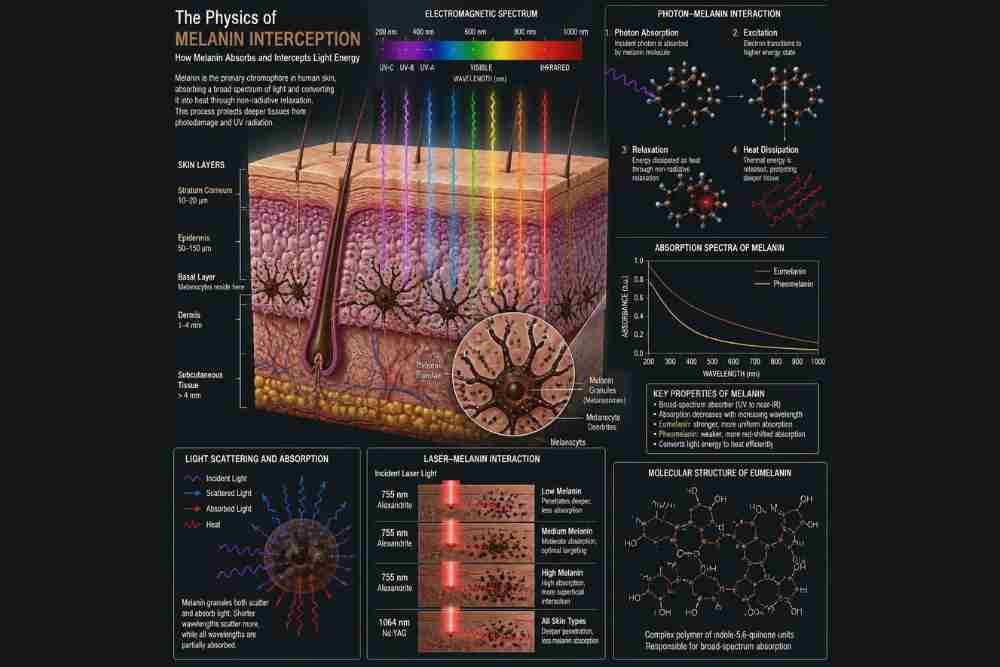
The Physics of Melanin Interception

Why does this scale matter so much for a treatment like the CO2 Laser?
Medical lasers use intense, concentrated beams of light. While the CO2 laser primary targets water inside your cells, secondary energy absorption happens in the surrounding melanocytes (the cells that manufacture skin pigment).
- Types I to III (Low Melanin Density):These skin types have less active pigment-producing factories. They can tolerate higher energy levels and deeper thermal heating with a very low risk of changing the pigment profile of the skin.
- Types IV to VI (High Melanin Density):These skin types possess incredibly active melanocytes. If a laser pulse is too long or generating too much heat, these sensitive pigment cells interpret the thermal energy as a severe injury. In response, they go into emergency overdrive, dropping excessive pigment into the surrounding skin—a frustrating complication known as Post-Inflammatory Hyperpigmentation (PIH).
Safe Laser Engineering at Ziva
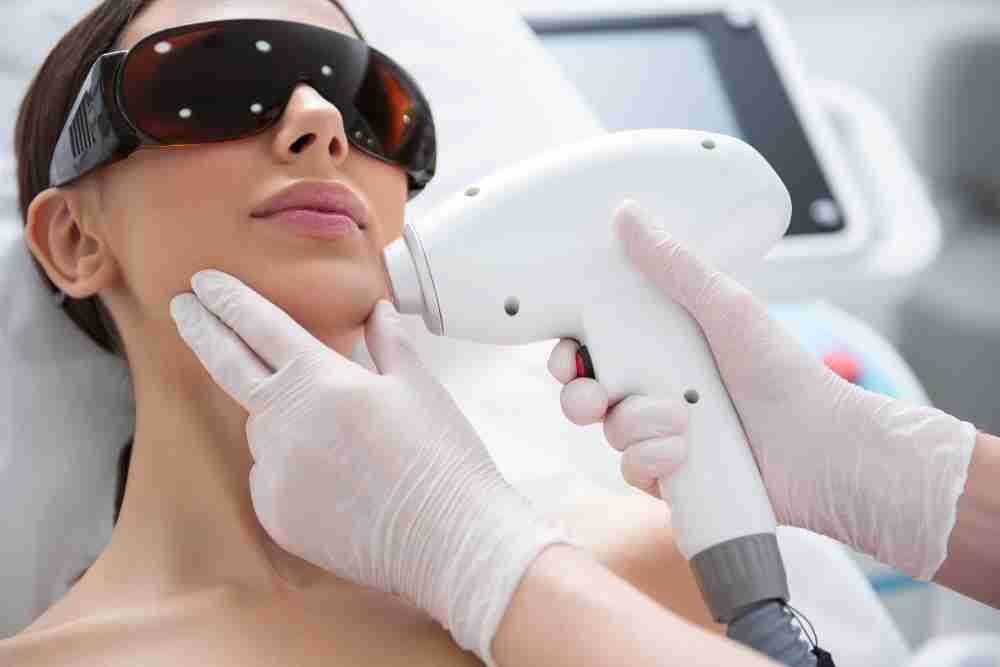
Does a higher Fitzpatrick type mean you can never get a laser treatment? Absolutely not.
In 2026, advanced technology allows us to customize the pulse shapes, dwell times, and fractional density of our lasers. For our Type IV to VI clients, Dr. Vini alters the physics: using ultra-short bursts of energy that vaporize target tissue so quickly that heat doesn’t have time to bleed into the surrounding delicate pigment cells.